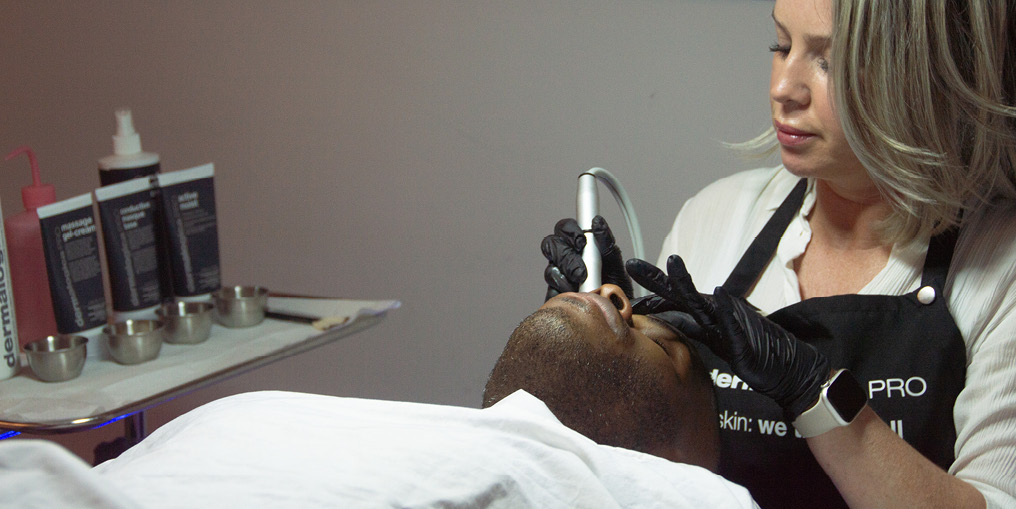
Beauty professionals who work in esthetics focus on skin care. Estheticians who graduate from a high-quality training program can provide a wide range of services, including facials, skin analysis, waxing and makeup application. Careers in esthetics may be available in salons, spas, resorts, beauty retail and product-related businesses. The specific services they perform and the professional requirements they meet depend on the laws of the state where they work.
What Is Esthetics?
Esthetics refers to cosmetic services that focus on skin care. An esthetician analyzes a client’s skin and provides cosmetic services focused on the care and appearance of the skin. Those services include facials, hair removal and recommending products that support the client’s skin care routine.
The work involves more than technical services. Estheticians need to know how to communicate with clients, maintain clean work areas, follow sanitation procedures and understand the products they use. These responsibilities make professional training important for anyone considering careers in esthetics.
How Is Esthetics Different From Cosmetology?
Esthetics and cosmetology are both parts of the beauty industry, but the training for each has a different focus. An esthetics program concentrates on skin care, facials, waxing, makeup and related services.
Cosmetology programs provide broader training. They typically focus heavily on hair cutting, coloring, styling and texture services while also introducing students to nail care, skin care and makeup. Someone whose main interest is skin care may prefer esthetics. Someone who wants to practice hairstyling along with a wider range of beauty services may choose cosmetology.
Students trying to decide which path can best help them accomplish their goals can benefit from reading a detailed comparison of estheticians and cosmetologists.
What Training Do You Need for a Career in Esthetics?
Esthetics training combines classroom study with supervised practice. Students learn the theory behind skin care services before developing their techniques through hands-on work.
A program typically includes instruction in:
- Skin analysis
- Facials and skin care treatments
- Waxing and other hair-removal methods
- Makeup application
- Product ingredients and selection
- Safety and sanitation
- Client consultations
- Retail and business skills
Empire Beauty School’s Esthetics/Aesthetics Program includes training in facials, waxing, makeup artistry, skin analysis, ingredient technology and professional skills. Program availability, curriculum details and required training hours may vary by campus and state.
Can You Work as a Skin Care Specialist?
Many estheticians work directly with clients as skin care specialists. They analyze the skin, discuss a client’s routine and perform cosmetic services. They may also recommend products for use between appointments.
A skin care specialist must understand the boundaries of the profession. Estheticians provide cosmetic services but do not diagnose or treat medical conditions unless they hold other credentials that legally permit them to do so. When a concern falls outside their professional scope, they should refer the client to an appropriate healthcare provider.
Can Estheticians Work in a Salon or Spa?
Salons and spas are common work settings for estheticians. Depending on the business and the professional’s license, services may include facials, waxing, makeup application and other skin care treatments. Some estheticians work in businesses devoted primarily to skin care, while others work alongside hairstylists, massage therapists and nail technicians. In all cases, estheticians require technical ability as well as skills in communication and customer service.
Can Estheticians Specialize in Facial Services or Waxing?
A facialist or spa esthetician may concentrate on cleansing, exfoliation, masks, moisturizing and other facial services. A waxing specialist may focus on removing unwanted hair from different areas of the face or body.
Specialization often develops through continuing education and experience. Estheticians should verify that any advanced or specialized service they want to provide falls within the scope of their state license.
Can Estheticians Work in Makeup Artistry?
Esthetics training may provide a foundation in makeup application. Some graduates use these skills to pursue opportunities providing makeup services in salons, spas, retail environments or for special events.
Makeup artists need to understand color, product application and skin preparation. They also must follow sanitation procedures when using brushes, applicators and products with multiple clients. Licensing rules for makeup services differ by state and work setting.
Can Estheticians Work for Beauty-Product Companies?
Skin care knowledge also is useful in beauty retail and product-related roles. Some estheticians work for cosmetics or skin care companies as retail specialists, product representatives, brand educators or sales professionals. These positions usually involve helping customers understand products or educating other beauty professionals about specific products. Many of these roles place greater emphasis on sales than on providing services.
What Other Career Paths Can Estheticians Consider?
As estheticians gain experience, some explore roles beyond providing services directly to clients in salons and spas. Potential paths may include:
- Spa or salon management
- Beauty retail
- Resort or cruise-ship spa services
- Independent or mobile esthetics services
- Business ownership
- Esthetics instruction
Some of these paths require additional education, experience, licensing or business permits. For example, becoming an instructor generally involves requirements beyond an entry-level esthetics license. Opening a business also requires an understanding of state and local regulations, insurance, finances and daily operations.
Do Estheticians Need a State License?
Estheticians generally must complete state-required training and meet licensing requirements before providing professional services. Depending on the state, the process may include written or practical examinations, an application and associated fees.
License names, required training hours and permitted services differ among states. Requirements may also affect whether an esthetician can offer a particular type of treatment or work independently. Students should consult the licensing agency in the state where they plan to work for current information.
How Can You Decide Whether an Esthetics Career Is Right for You?
Esthetics may appeal to people who enjoy skin care, hands-on work and personal interaction. Professionals need to pay close attention to detail, follow sanitation procedures and communicate with clients about their needs and expectations.
Before selecting a program, think about the services and work environments that interest you. Then learn about the state licensing requirements and the qualifications commonly requested for those roles. Empire Beauty School’s esthetics/aesthetics program can help you meet those requirements, providing a curriculum that includes both theory and practical training.
Frequently Asked Questions
Where can estheticians work?
Estheticians may work in salons, spas, resorts, cruise-ship spas, beauty retail settings and skin care businesses. Available roles depend on a person’s license, experience, additional training and local regulations.
Can an esthetician own a business?
An esthetician may be able to operate an independent practice or own a spa or salon after meeting applicable licensing, business, facility and insurance requirements. These requirements vary by location.
Can an esthetician work for a skin care brand?
Yes. Some estheticians pursue work in product sales, retail, demonstrations or education. Each company establishes its own qualifications, and some positions may require sales experience or additional product training.
Is an esthetician the same as a dermatologist?
No. An esthetician provides cosmetic skin care services, while a dermatologist is a physician who diagnoses and treats medical conditions involving the skin, hair and nails.
Does completing an esthetics program guarantee employment?
No educational program can guarantee a particular job. Completing an esthetics program can help students develop relevant skills and prepare to pursue licensure, but employment depends on factors such as licensing, location, experience, employer needs and each person’s job search.