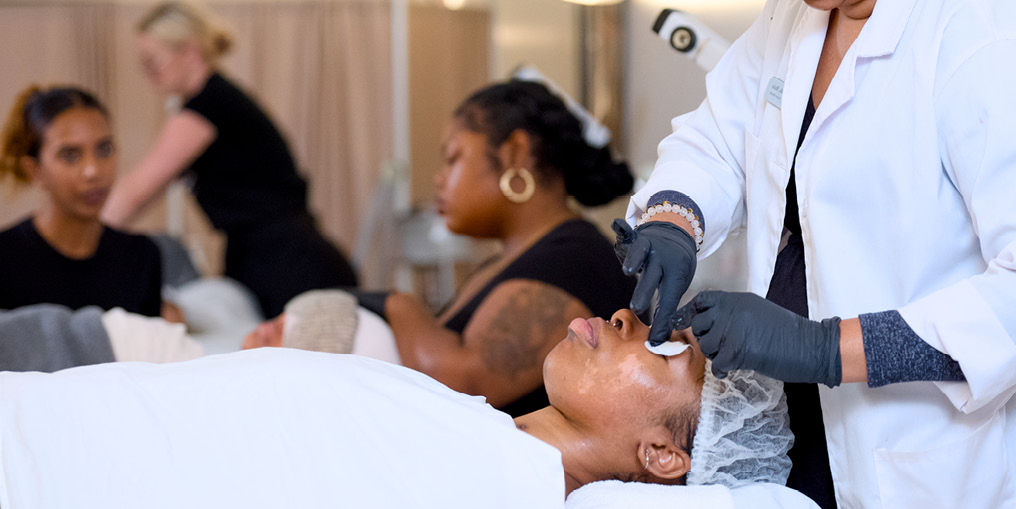
An esthetician program teaches you how to provide professional skin care and beauty services safely. Training combines classroom instruction in areas such as skin analysis with hands-on practice, client consultation and other skills that contribute to a positive guest experience. Together, these lessons help prepare you to pursue state licensure and opportunities in salons and spas.
What Do You Learn in an Esthetician Program?
Esthetics training focuses primarily on the care and appearance of the skin. The exact curriculum and number of training hours vary by school and state, but programs typically combine technical knowledge with practical experience.
In an esthetics program, you develop skills in areas such as:
- Skin analysis
- Facial treatments
- Waxing and other hair-removal methods
- Makeup application
- Product and ingredient knowledge
- Safety and sanitation
- Client consultation and communication
- Retailing and business practices
The Esthetics/Aesthetics Program at Empire Beauty School covers facials, waxing, makeup artistry, skin analysis, ingredient technology and other professional skills.
How Do Estheticians Analyze a Client’s Skin?
Estheticians use skin analysis to understand a client’s skin and determine which services are appropriate for their situation. You learn to recognize common characteristics and ask questions about the client’s skin care routines and goals.
This process also teaches you an important professional boundary: Estheticians provide cosmetic skin care services but do not diagnose or treat medical conditions. Learning to recognize when a client should consult a medical professional is part of providing responsible service.
What Facial Techniques Do Esthetics Students Practice?
Facials are a central part of most esthetics programs. As an esthetics student, you learn how to cleanse, exfoliate, apply masks and moisturize the skin while using the tools and products associated with each step. You also learn how to prepare the treatment area and guide a client through the service.
Technical ability is only one part of performing a facial. You must also consider the client’s comfort and adjust the service when appropriate. Repeated practice helps you become more confident while learning to provide a consistent experience.
Do Esthetician Programs Teach Waxing?
Esthetics students commonly learn waxing and other approaches to hair removal. Training may cover how to prepare the skin, use products and tools correctly, apply and remove wax and reduce the risk of irritation or injury.
Because waxing involves direct contact with a client’s skin, you also learn about safety precautions and when a service may not be appropriate.
Can You Learn Makeup Application in an Esthetician Program?
Many esthetician programs include makeup artistry. In these programs, you practice selecting and applying products, enhancing facial features and creating looks for everyday wear or special occasions. You also learn how skin preparation can influence the appearance and wear of makeup.
Makeup training is closely connected to skin analysis and client consultation. Before beginning a service, you need to understand the client’s preferences and any skin sensitivities that could affect product selection.
Why Are Sanitation and Safety Important in Esthetics Training?
Estheticians work closely with clients and use tools, products, linens and work surfaces that must be kept clean. Improper practices may expose clients to contamination and skin irritation.
An esthetician program teaches you how to sanitize tools, maintain an orderly workspace, handle products properly and follow health and safety rules. These practices become routine because sanitation is both a licensing concern and a basic professional responsibility.
What Client Consultation Skills Do Esthetics Students Learn?
A client consultation gives an esthetician the opportunity to learn about the person receiving the service. You practice asking about the client’s skin care routine, goals, sensitivities and relevant service history. You also learn how to listen carefully, explain procedures and set reasonable expectations.
Good communication continues throughout the appointment. An esthetician should help the client understand the service, check on their comfort and discuss appropriate aftercare. These interactions can help build trust and encourage clients to return for future services.
Why Is Hands-On Esthetics Training Important?
In the classroom, you learn the background knowledge needed to understand the esthetics services you want to provide. You may study the structure and function of the skin, product ingredients, service procedures, sanitation standards and state regulations.
Hands-on training offers you a way to apply your new knowledge. You may begin by practicing techniques on mannequins or classmates before working with guests. At Empire’s student salons and clinics, senior students perform services under the supervision of licensed educators. This experience helps you practice technical services while also developing time management, communication, retail and customer-service skills.
How Does an Esthetician Program Help Prepare Students for Licensure?
Each state establishes its own requirements for estheticians. Completing an approved training program can help you complete the required instructional hours and prepare for the written and practical portions of any required licensing examination.
The connection between theory and practice is especially important when preparing for licensure. You need to understand why procedures are performed in a particular way and demonstrate that you can perform them safely.
Is an Esthetician Program Right for You?
An esthetics program may be a good fit if you are interested in skin care, facials, waxing, makeup and working directly with clients. The profession also requires a willingness to keep learning and the ability to make clients feel comfortable.
You can learn more about what an esthetician does and explore the training available through Empire Beauty School. Contact your preferred campus to confirm whether the esthetics/aesthetics program is offered there and to ask about its curriculum and schedule.
Frequently Asked Questions
How long does an esthetician program take?
Program length depends on the number of training hours required by the state and whether the student attends on a full-time or part-time schedule. Contact the school you are considering for its current program schedule and completion timeline.
Do you practice on real clients in esthetician school?
Students may begin by practicing on mannequins or classmates. Later in their training, they may provide services to guests in a supervised student salon or clinic, depending on the school, program and state requirements.
Does an esthetician program teach skin care product knowledge?
Yes. Students commonly study product types and how different products are used during professional services. They may also learn how to discuss appropriate products and home-care routines with clients.
Do esthetics students learn business skills?
Many programs include training in retailing, client retention, professional communication and other business-related topics. These skills can be useful for estheticians working in salons, spas, retail environments or their own businesses.
Does completing an esthetician program automatically provide a license?
No. Completing the required education is generally one step in the licensing process. Graduates must also meet their state’s other requirements, which may include passing written or practical examinations and submitting a license application.